

How to Choose a Wunda Chair
How to Choose a Wunda Chair That Suits Your Body, Space and Budget
The real worry is buying a chair that turns out wrong for your room or the way you'll use it. This guide takes the decision in order: who the chair is for, the features that matter, build quality and budget. We're Australian owned and operated, and you can try chairs at our Sydney showroom before you commit.
Talk to our team about the right Wunda Chair

What a Wunda Chair does and why the choice matters
A compact chair with a lot of range
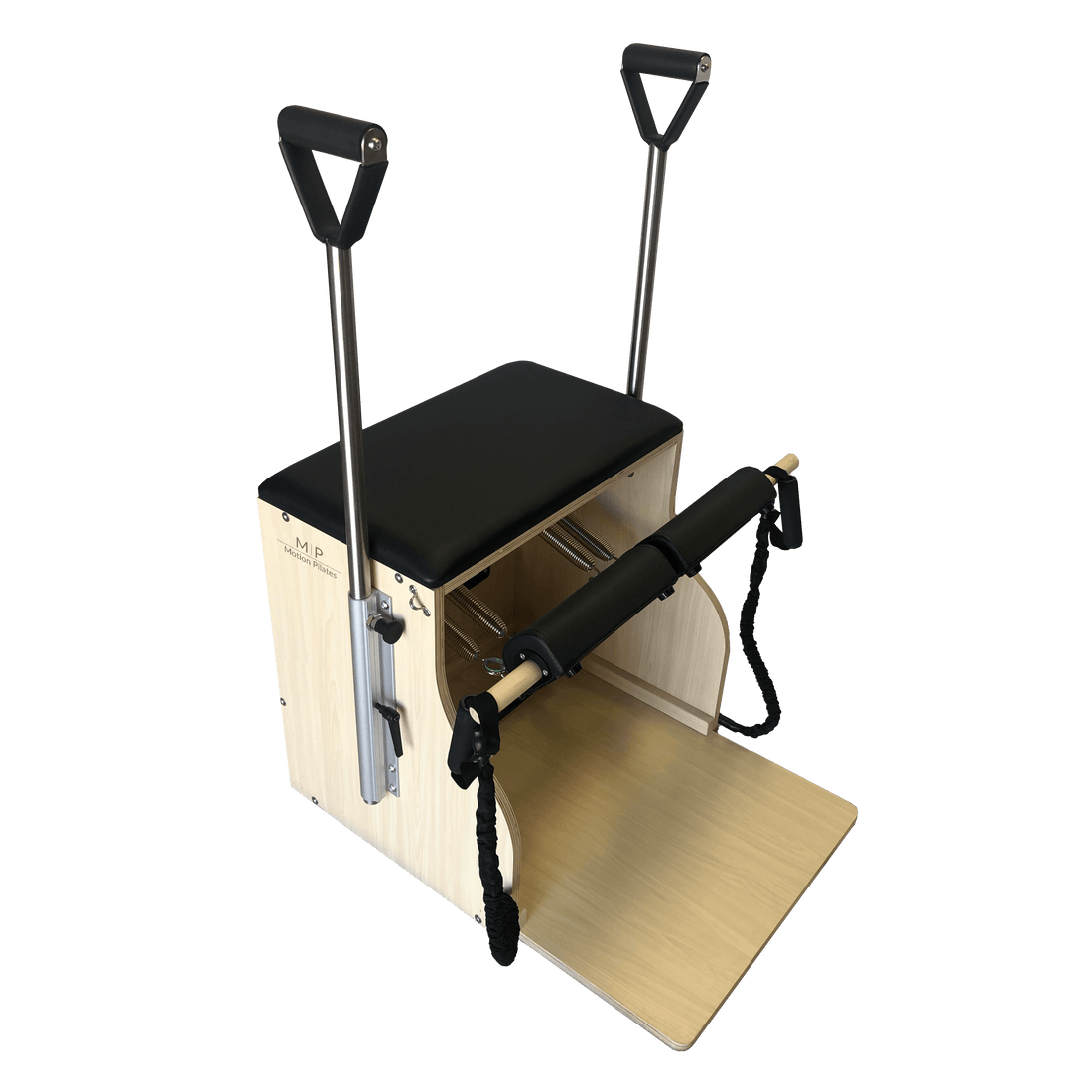
A Wunda Chair is a small Pilates chair with a padded seat, a spring-loaded pedal (or pair of pedals) and, on most models, removable handles. We stock them for both home and commercial studios, so you are choosing between designs, not between a "home" and a "pro" version of the same thing.

Because it is so compact, a wunda chair fits into a spare corner and still offers plenty of ways to move. You can work sitting, kneeling, standing or lying prone, according to Motion Pilates, and each position changes how the pedal, springs and your body interact.
- Regular price
-
$1,290.00 - Regular price
-
$1,690.00 - Sale price
-
$1,290.00
Small design differences change how it feels
Two chairs can look alike and feel quite different underfoot. A few details shape the experience:
- Split or single pedal, which affects whether each leg can work on its own
- How resistance is set and changed
- Handle design and adjustability
- Padding, frame and overall stability
The rest of this guide helps you weigh those up. As with any Pilates equipment, proper form and qualified instruction matter. If you are returning from an injury, check with your physiotherapist or doctor before you start.
A quick checklist before you compare models
Five checks narrow the field fast. Run through them before you look at any model in detail.
- Experience level: beginners should look for adjustable spring resistance, while advanced users may prefer models with multiple spring settings.
- Space: measure the spot first. The standard dimensions are roughly 60cm x 40cm, with about 60cm of height.
- Build quality: look for sturdy steel construction, a stated weight capacity and smooth pedal movement.
- Budget: entry-level chairs start around AUD 800 and professional-grade models go up to about AUD 1,500, plus delivery.
- Pedals and extras: check the handles, whether the pedals split or join, the padding and whether foot straps are included.
Split pedal or single pedal: which is right for you?
Where the chair will live shapes the pedal choice
For many home users, a single pedal chair is the simpler fit. For studios, a split pedal chair is usually a strong match, because it lets clients train one leg at a time and gives you finer control over resistance. We supply both, so the setting is the right place to start.
Home use: simple and compact
A home studio usually has one or two users, limited floor space and a need to store the chair between sessions. The single pedal 'Wonder Chair' style suits beginners who want straightforward movement. A split pedal wunda chair also works at home if you want the traditional design and a wider exercise range.
Commercial studios: independence and variety
Studios run many clients through each day, often at different levels. Split pedals support independent one-leg work and precise resistance control, which instructors tend to value across a mixed group. Models like the Pioneer Pilates Deluxe Wunda Chair are sold for both commercial and home settings, and our range covers each.
- Regular price
-
$1,590.00 - Regular price
-
$0.00 - Sale price
-
$1,590.00
Wunda Chair vs Combo Chair vs electric chair
The traditional Wunda Chair, the Combo Chair and electric-style chairs differ mainly in how they are built and how much adjustment they offer.
Traditional Wunda Chair
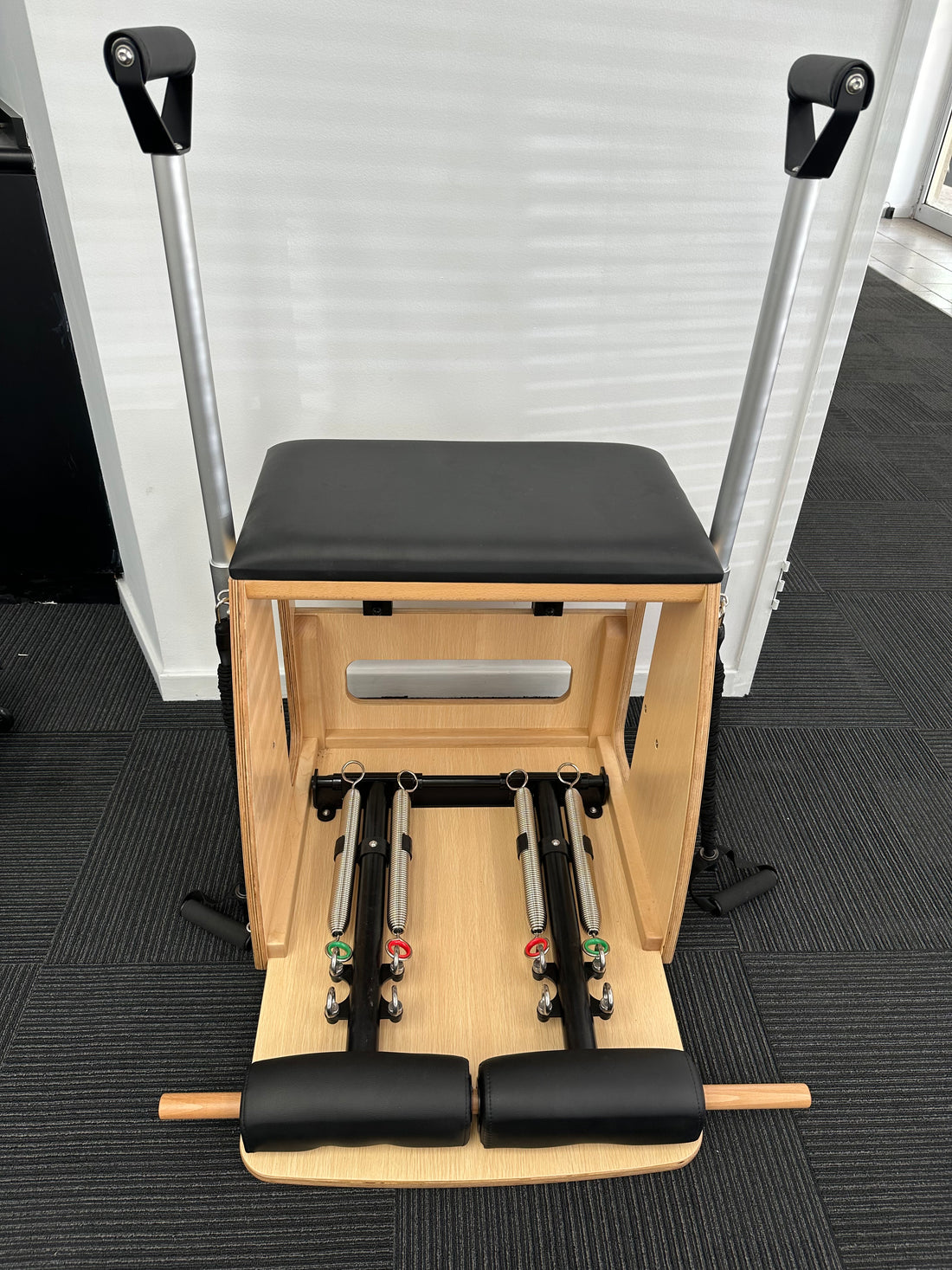
The traditional wunda chair uses split pedals, which allow independent one-leg-at-a-time work and precise resistance control. Experienced practitioners often choose it for its authentic design and wide exercise range. It is also credited with durability, stability and a space-saving footprint, which is why it appears in so many Australian studios.
Combo Chair
The Combo Chair builds on Joseph Pilates' original design. It has a padded split pedal, adjustable resistance and re-engineered handles for added stability. Its 'cactus' resistance system uses a springtree, so you can change springs quickly and use multiple attachment positions. The Pioneer Pilates Deluxe is a split pedal combo model with removable handles and a hand-sanded beechwood frame.
Look closely at the frame, the pedal action and how the springs attach. Those details tell you far more about long-term durability than any feature list.
Pilates Direct Team, Pilates Reformer & Equipment Specialists
Electric-style chairs
We have not listed specifications for electric-style chairs here, so we will not guess at them. If you are weighing one up against a manual Wunda Chair, apply the same checks: solid construction, a stated weight capacity, smooth pedal movement and secure upholstery.

How does spring resistance affect your workout?
Heavier and lighter springs do different jobs
Spring resistance sets how hard each movement feels. Heavier settings ask for more muscular effort, while lighter settings suit slow, precise, repeated movements. Motion Pilates describes the Motion Pilates Deluxe Wunda Chair in these terms, noting that more resistance gives a more intense muscle-building routine.
What beginners should look for
If you are new to the chair, choose a model with adjustable springs. That lets you start light, learn the movements with good alignment, and add load gradually as you feel steady. A Wunda Chair with adjustable resistance suits a range of fitness levels.
Why advanced users may want more settings
Experienced practitioners often prefer several spring settings, so they can vary the challenge from one exercise to the next. The Combo Chair's cactus system with a springtree makes those changes quick, with multiple attachment positions. If you are returning from an injury, check with your physiotherapist or doctor before choosing a setting.
Wunda chair handles, pedals and padding: the features worth checking
A good way to judge these features is to use the chair yourself. At our Sydney showroom you can try a Wunda Chair before you buy it, so you can confirm how it fits your body and your space.
On the Motion Pilates Wunda Chair, the removable handles adjust with a twist-and-pull knob across a 115cm to 145cm height range. Try the knob and see how smoothly it moves.
The pedals can be joined or separated with an included wooden bar that locks through them, so you can feel the difference between single and split use. Sit on the padded seat, check the non-slip, washable pedals, and ask to see the included foot straps. Our team can show you how each feature works.
Build quality and materials
What solid construction looks like
A well-built Wunda Chair starts with sturdy steel construction, a clearly stated weight capacity and smooth pedal movement. Those three checks tell you more about long-term value than a spec sheet full of extras, whether the chair is going into a home or a busy commercial studio.
When you test a chair, press the pedal through its full range. It should move evenly without sticking or rattling, and the frame should feel planted rather than wobbly.
A timber example: Pioneer Pilates Deluxe
If you prefer the look of timber, the Pioneer Pilates Deluxe Wunda Chair is a good example. It is a split pedal combo model with removable handles, built from hand-sanded beechwood and upholstered in a soft, durable material with EVA foam padding. It is sold for both home and commercial use, so you can match the finish to your space.

Wunda chair space requirements: will it fit in your home?
Yes, for most homes
A Wunda Chair has a compact footprint of around 60cm x 60cm, which is why it suits a spare room, a corner of the living area or a small home studio. You will need extra clear floor space around it to move safely, so we always start with your room rather than the chair.
How we match a chair to your space
When you contact us, we ask a few simple questions:
- How much floor space and ceiling height do you have?
- Who will use the chair, and at what experience level?
- What are your goals, and will the chair stay put or be stored between sessions?
From there we recommend a wunda chair that fits your room and how you plan to use it.
Floors, safety and storage
Look for non-slip feet to protect your flooring, a reinforced frame, and safety straps. The chair's compact size also makes storing it between sessions straightforward.
Wunda chair exercises and what suits beginners
What a new user can expect to do
A Wunda Chair suits beginners well because the same chair lets you work from sitting, kneeling, standing or lying prone positions, so you can start with simple movements and add variety over time. The padded split pedal also allows work with one leg at a time or both together.
Starting light, then progressing
We suggest beginners choose a wunda chair with adjustable springs and begin on a lighter setting while you learn how the pedal and handles feel. As your control develops, you can move to firmer settings and more varied positions. Models with multiple spring settings give you room to progress without changing equipment.
We recommend learning with a qualified instructor. If you have an injury or health concern, check with a physiotherapist or doctor before you start.
What should you budget for a Wunda Chair?
Expect to pay from about AUD 800 for an entry-level Wunda Chair, and up to about AUD 1,500 for a professional-grade model. That range covers most chairs suited to a home studio through to a busy commercial studio. Add delivery to your total, as it changes the final figure.
Price tells you less than fit does. A chair you'll use for years, with a sturdy frame and adjustable springs, tends to suit a wide range of fitness levels. Where you can, test a few models and read Australian user reviews before you decide.
If the upfront cost is the sticking point, we offer rent-to-own and payment plans, so you can spread the cost. We'd rather you feel confident than rushed.
Wunda Chair questions we hear often
How much space does a Wunda Chair need?
Less than most Pilates equipment. The standard dimensions we work from are 60cm W x 40cm D x 60cm H, with a footprint of around 60cm x 60cm in use. Measure your spare floor area before you buy, and leave room around the chair for safe movement.
Is a Wunda Chair suitable for beginners?
Yes, provided you choose adjustable spring resistance and start light. A single-pedal chair is a simpler starting point, while a split pedal gives you more range as you progress. Proper form and qualified instruction matter on any chair, especially in your first sessions.
Should I rent or buy?
It depends on how sure you are about long-term use. We offer rent-to-own and payment plan options, so you can spread the cost or try a chair at home first. Ask us which option suits your budget.
Do you deliver and install?
Yes. We handle delivery and installation, and we provide aftercare support once your chair is set up, for home and commercial studios alike.
Can I buy a used or demo chair?
Stock changes, so we can't promise availability here. Contact us to ask what is currently on offer, or visit our Sydney showroom to try before you buy.
Do I need medical clearance if I'm injured?
If you have an injury or health condition, see a physiotherapist or doctor for clearance before using a Wunda Chair. We can help you choose equipment, but we can't give medical advice.
Ready to compare chairs in person or online?
Browse our Wunda Chair range online, or visit our Sydney showroom to try before you buy. Not sure which chair fits your space and goals? Send us an enquiry and we'll recommend a few options, including rent-to-own and payment plan choices. We support you from your first question through delivery, installation and aftercare.